Getting Started Part 2: One City, Endless Adventures

Imagine being in Paris long enough to have a favorite bakery, go back to a museum a second time, and find the best bench to watch the sun set over the Seine. 

When you are considering traveling on your own, picking one city and allowing yourself the time to get comfortable and explore at your own pace can be exhilarating and low risk.  You can practice your travel chops with very few logistics to manage.

There are three factors that work for me: a few group activities, the right hotel, and intentional listening about priorities every day.

Booking Activities.  Being on your own is glorious and you will likely have planned out things you want to do and see. Having just a couple of activities on the schedule that put you in contact with other travelers can be a break. (If nothing else, you might appreciate being on your own even more after.) This could be booking a half-day city tour, a segway excursion, or a group class. If groups aren’t your thing, you might book a private walking tour guide.  I love to try cooking classes or foodie events (because local cheese tastings, wow). Group activities are easy to book in advance and—your hotel may have ideas. 

The Right Hotel.  I love hotels and spend more time reading about hotels, inns, and AirBnBs than any other part of planning. There are at least three ways the right hotel can support your plan.

  • Location. If you want a bit more confidence, choose a hotel central to the sites and activities you are most interested in. It may be more expensive but it can be worth it.  The city is just outside your door. Walking to the theatre or taking an early morning through the historic center is priceless. 
  • Public space.  Have you ever spent the day walking and exploring – and find that you are too tired for even one more block – but it’s your dream city and you are not ready to leave it all – certainly not to go to your room and close the door?   Choosing a hotel with lots of options for a quiet drink with a view, a bustling lobby for people-watching, or a library bar let’s you stay in the swing but with your feet up.
  • Accommodations: Hotels vs Other Choices.  Today we have access to information about hotels, inns, AirBnBs, and bed and breakfasts – even unusual accommodations that are quirky. (I once stayed in a guest room at Hotel Dieu, a hospital in Paris. Very odd, great gardens, creepy at night, wouldn’t have missed it.)  In cities, hotels can offer you a few benefits that are valuable when you are alone. 
    • Staff.  When you arrive, regardless of the hour, staff are there to greet and help.  If you have a problem, from a medical issue to a haircut, they have advice.  Basically they are your team
    • Predictability. Not always true but between the website and TripAdvisor.com and other sites, you can a realistic sense of what your experience will be at a hotel.
    • Services.  Bellmen, room service, a coffee shop or dining room, maybe a spa or business center.  The city has so much to offer but sometimes you will want an easy fix!
    • And don’t discount that a hotel is easier to find when you arrived, travel weary in a new place, and just less lonely when you are on your own. At least for now.

Listen.  And last, this kind of trip gives you a precious opportunity to learn how to be alone with yourself and to be intentional in your choices. You’d think that traveling alone makes it obvious that you’ll do what you most want to do and yet some of us are out of practice.  Will you hear yourself saying, “I should go to see…”, “I told everyone that I would…”.   Two things to tuck away in our mental fanny bag:

  • You are the only one you have to please on this trip. It’s not just what you want to do but what you want to do this morning. You’ve arrived, you’ve learned things since you made your list of must-dos. Ask yourself what you, not you ‘the trip planner of last month’, want to do today.
  • Make sure fear isn’t holding you back.  When you choose not to do something that was on your wish list that’s making a choice today, unless it’s because you are nervous or afraid. Maybe once you are there, you realize that like me, you are as self conscious in this new place as you are at home. Take a minute to ask, am I self-conscious about going to this place alone? Will they laugh at my French? Will it be weird? Go for it – no one is watching

Important disclaimer.  Listen to your instincts about fear for security. Ask hotel staff about safety in our area. What I’m talking about here is being afraid to go alone to a top restaurant or to try climbing the steps to Sacre Coeur.

Explore your dream city. The only logistics are the cab to and from the airport. The rest is literally a walk in the park.

Getting Started: Taking Your First Solo Adventure

You can begin traveling on your own now, starting slow, building up skills, and testing your confidence level. Learning is in itself a journey with some pretty significant benefits.

When you talk with friends who love to travel, they can usually tell you how they got started, especially if you buy the wine.  My first trip abroad, in high school, was with a mixed group of students and recent retirees, a trip of a lifetime for all of us. For months, I slept with the brochure at my bedside, memorized the itinerary, and dreamed about what we’d see. It was a supportive first trip for a kid from the rural south to learn about currency exchange, public transportation, and why the English put butter on my ham sandwich. How do you make the next step?

Here are some great ways to begin. I’ve overthought this so you’ll see upcoming blogs on each possibility.

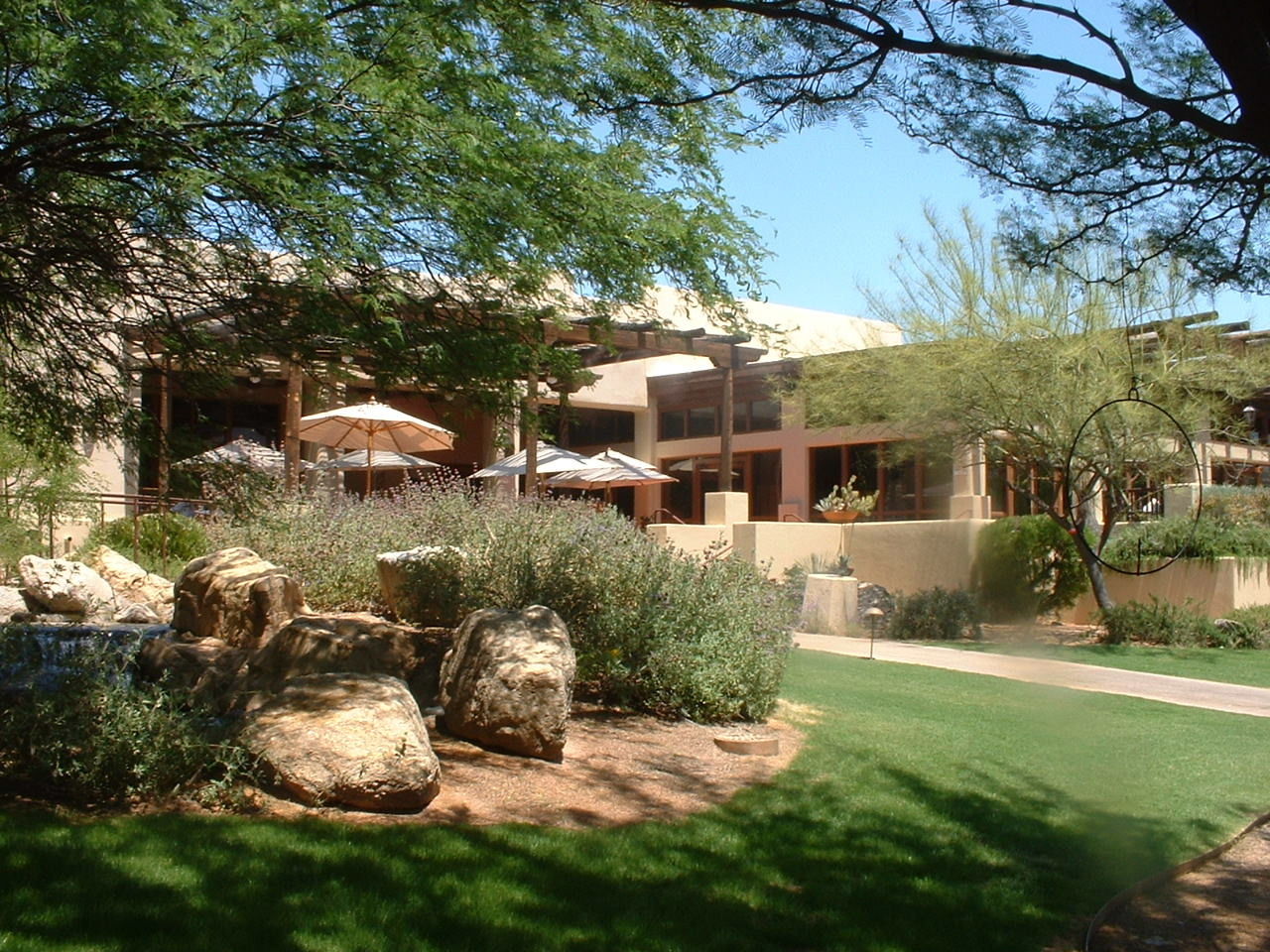
Visit a resort with lots of activities.  This is how I began travelling alone, with a destination spa resort full of classes and events to schedule.  I visited Miraval, a destination spa in Tucson, that was like summer camp for grownups. At the resort, I met people in classes, went to happy hour, and even had a seat at a single traveler’s dinner table. I was in control of the amount of solitude and independence I wanted.  I met great people, but it was my trip.

Travel to a city that you would love to explore and find a ‘home base’ hotel.  This is a wonderful next step.  I chose Paris.  I’d always wanted the time to walk the city and understand the two banks, the Ile de la Cite, and arrondissements.  Picking the right hotel and making a couple of key activity reservations can make all the difference.

Then the big league. This may be where you start! For me, it took a minute. Letting go of home base, where the staff was there to help, and being truly on the road was a big step.  Eventually, I tried riding the rails, then driving, and ferry-hopping.  Once I was comfortable, I began to crave this freedom of the open road and the possibilities in a day all your own.

On that first trip to Miraval, I pored over the daily offerings and (yes, really) I made a spreadsheet to make sure that I could, if I wanted, fit everything in.  This was very easy travel BUT it helped me learn to to think deeply every day about what I wanted to do (not what I should do or what I said I’d do, and not the spreadsheet).  It actually takes a little practice.

What I Learned

  • The Magic Moment. Feel that moment when you step off a plane, alone, in a new place, with only yourself. No expectations to fulfill, no one waiting for you. You don’t bring all your roles and identities with you unless you choose to. Blank slate!
  • Self-management. One of the hardest things about traveling alone for me is not whether I know how to navigate the world but knowing how to manage myself.  How do you respond when something doesn’t go well? How do you come back from that? Do you remember how to connect with new people? Do you want to? What do YOU want to do today? If you get a handle on this, you’ll see benefits in other areas of your life.
  • Vulnerability.  In other areas of life, you may not be great at asking for help. I practice this more when I’m traveling on my own. If you are gracious and a good listener, asking can make a difference. If I have a concern about my room, I engage the front desk in possibilities. If I need advice about the day, I ask. Your experience is precious. Admit you’re in new territory and sometimes the result is more than you imagine.

The Arithmetic of Solo Travel

I have a process.  While solo travel is spontaneous, soul-shifting, and sometimes mystical, I have a process.

After that flash of inspiration where on some rainy Friday night with little warning or rational thought about retirement planning I commit to the airline tickets, I start “the plan.”  It is an approach that at its root harbors a fear, a deep fear of freezing in the face of too many choices.

Lowest Common Denominator.  Using a stern, middle school math teacher’s insistence, I look for that lowest commonality – the very basic requirements for my plan.  I sort.  What are the priorities, the real essentials for the trip? As I planned my trip to the Highlands and the Hebrides, what were those non-negotiable experiences?  This took several days of honest thought. At its prime number level, it was castles, Culloden, and the freedom of ferry-hopping. It was also the hope to reclaim that feeling of freedom on the open road adventure that I found on Iceland’s Ring Road, my first solo trip with a car.  Should I happen to stop for a rest break at the scotch distillery, so be it.

So, as Bill Clinton said at the 2012 DNC, It’s ARITHMETIC.

I do not have the infographic, but as I look at the list of all the great places I’d like to see and the must-see essentials, I start to subtract.  Looking at drive times, maps, events to avoid (Mull Road Race), and a real desire to stay at least two nights in each destination, the trip takes shape.  Any spot that isn’t a priority has to be on the wait list.  Any destination that falls too far outside the compass circle of my essential trip, has to wait.

(Side note: I love two nights just because there needs to be one perfect day where you awaken in this place with the day ahead of you, knowing you’ll come back in the evening.  Except Mont St. Michel.  Hear me. One night only. And leave immediately after breakfast. Really.)

The Multiplication.  When the framework of the basic trip is done and the hotels booked (which is by far the best part), I step back.  It’s like the journey itself begins now, long before departure day. As you run through the itinerary in your imagination, there is now the discovery of new possibilities and all the things on the way.

So what do I mean?  Planning that trip to the northwest Highlands, my tickets, hotels, ferry reservations are all made. I find some solid security in that. Now with lots of context and no cares, I start reading, mapping and dreaming. The personal adventure starts to take shape.

A couple of weeks before I left, I was planning  (or dreaming) the route from Stirling to Inverness and realized that the drive time would leave me a full afternoon on arrival in Inverness. I didn’t see that coming – so many drives on this trips were on winding roads but this was highway.  Speed!  I could head right to the Culloden battle field before going into town. What about that one perfect day in Inverness then?  Looking outside my compass circle, I really can take the time to drive to John O’Groats, an easy 2.5 hours up the coast, with beautiful scenery, to the northernmost tip of Scotland. With a free day, I can leave after breakfast and be there before lunch and home for an afternoon stroll before dinner.

Good quickly became great.  There it was! TAIN. The home of my favorite whisky, made by the mysterious sixteen men of Tain.  Right on my way up the coast. An experience I had ruled out is back in and even better now that I have the overall plan.

Life.  Basically, with travel planning, I find pockets of possibility – remembering the adrenaline of travel, learning more about the landscape I’m travelling, checking the drive times, and then the reclaiming of time and surprise and possibility. I know I live my real life very much like that first stage of the plan.  Now, I would like to spend more time living the multiplication stage – the search for possibilities, the constant adding and learning, and new things on the way. Living in the “yes, I can.”

What I Learned

  • Find a tool that works for you as your trip takes shape. For me, it’s a spreadsheet – for you it might be a vision board, a flow chart or a map. Don’t be afraid to really shuffle it around and look at all the possibilities.  Seeing what it would be like to reverse the trip and drive across mountain passes doesn’t mean you have to…
  • Leave time along the itinerary when you begin planning.  It’s kind to your future travelling self but it also leaves room to add. It’s far more uplifting to add a great experience than to realize you have to give things up.
  • Check event schedules.  I planned out the whole Highlands trip and noticed no hotels were available on Mull for my dates. Though normally quiet off-season, my plan A itinerary had landed me in the Mull Road Rally. Luckily, you can reverse the dates on “the plan”.